

12 Interesting Facts About the Lake District, UK

The Lake District is one of the most visited tourist destinations in the UK and it’s no surprise that people from all over the world love it. With amazing scenery, quaint villages and a host of different activities to take part in including hiking and cycling, it’s the perfect place for a family break any time of year.
But beyond its famous fells and picture-perfect views, this UNESCO World Heritage Site has a fascinating mix of history, culture, and quirky local traditions. From hidden villages beneath reservoirs to one of the world’s largest colouring pencils, the Lake District is full of surprises.
If you’re staying in a cottage in the lake district, these 12 interesting facts about the Lake District will give you a new appreciation for this remarkable corner of the UK.
At a glance: Fun facts about the Lake District
- The Lakes welcomes millions of visitors every year
- There’s only one lake in the Lake District
- It’s home to the tallest mountain in England
- The area has England’s highest war memorial
- The Lake District has England’s largest body of water
- It’s home of the “Biggest Liar in the World” competition
- The world’s largest colouring pencil is in the Lake District
- It’s the birthplace of sticky toffee pudding
- There’s an underwater village
- The area is home to rare wildlife
- The Lake District has its own Cumbrian dialect
- It’s one of the wettest places in England
- It’s a source of literary inspiration
Let’s take a look at these facts in more detail.
1. The Lakes welcomes millions of visitors every year
In 2024, The Lake District had over 41 million visitors, making it one of the most popular tourist destinations. People travel from across the world to experience its stunning scenery, charming villages, and outdoor adventures.
From hiking rugged fells and exploring hidden valleys to cycling along scenic trails or taking a leisurely cruise on Windermere, there’s something for everyone.
2. It’s home to the tallest mountain in England
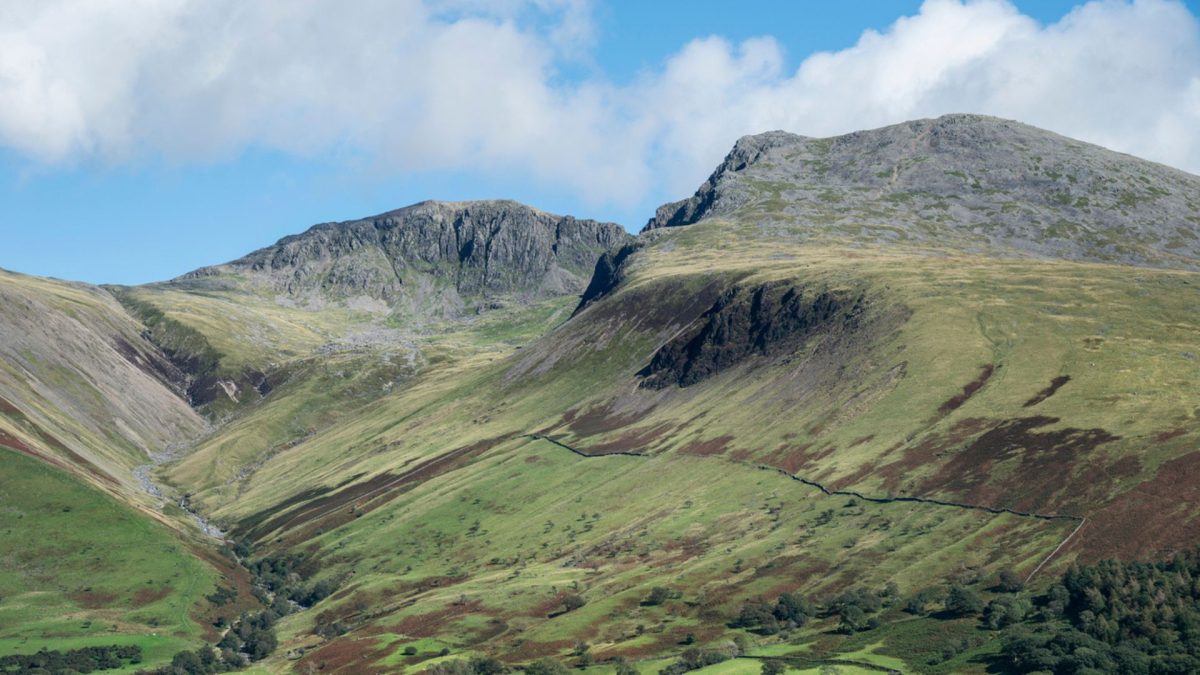
The region is famous for its dramatic peaks and challenging climbs. The tallest of them all is Scafell Pike, which stands at 978 metres (3,210 feet) making it the highest in all of England.
The tallest mountains are concentrated in the central and western fells, offering unmatched views and rugged beauty. Here’s a quick look at some of the highest summits in the region:
- Scafell Pike – 978 m (3,210 ft)
- Scafell – 964 m (3,162 ft)
- Helvellyn – 950 m (3,117 ft)
- Skiddaw – 931 m (3,054 ft)
- Great End – 910 m (2,986 ft)
- Bowfell – 902 m (2,959 ft)
- Great Gable – 899 m (2,949 ft)
- Pillar – 892 m (2,927 ft)
- Cross Fell (nearby Pennines) – 893 m (2,930 ft)
These peaks are a major draw for walkers and climbers alike, each offering a unique challenge and a breathtaking view from the top.
3. The area has England’s highest war memorial
Scafell Pike is not only England’s highest mountain, but also home to its highest war memorial. The peak was gifted to the National Trust by Lord Leconfield after the First World War, in memory of the thousands of men from the Lake District who fought and died. A stone cairn was built on the summit in 1919, bearing an inscription honouring their sacrifice.
A century later, National Trust rangers restored the cairn to mark 100 years since the war’s end. During the project, they uncovered relics left by past visitors, and a time capsule was placed within the memorial to record the restoration for future generations!
4. The Lake District has England’s largest body of water

Can you guess which body of water is the largest in England?
If you guessed Windermere, congratulations!
Windermere is the biggest body of water in England, covering around 5.7 square miles, 300 billion liters of water, and a maximum depth of 64 metres. Formed over 13,000 years ago during the last Ice Age, it’s home to Arctic charr, a rare cold-water fish species that became landlocked as the glaciers retreated.
Today, the lake faces environmental challenges such as eutrophication, warming waters, and the spread of invasive species like roach and bream. Conservation efforts led by the UK Centre for Ecology & Hydrology have helped reduce phosphate pollution and improve water quality through better sewage treatment.
Long-term monitoring continues to protect this iconic lake and its delicate ecosystem for future generations.
5. It’s home of the “Biggest Liar in the World” competition
The Lake District is home to the Biggest Liar in the World competition which takes place each year in the Wasdale Valley. People, including various celebrities, gather to tell the tallest tale they can in just five minutes off the cuff, and scripts or prompts are barred.
This is a slightly obscure Lake District fun fact, but that’s what makes it so interesting, right?!
6. The world’s largest colouring pencil is in the Lake District
Many people don’t know that the Lake District was the first home of graphite mines that were used to make pencils shipped all around the world. The biggest colouring pencil, 7.9 metres long, is at the Pencil Museum in Keswick!
Find out more about the Derwent Pencil Museum – a perfect rainy day activity in the Lakes.
7. It’s the birthplace of sticky toffee pudding
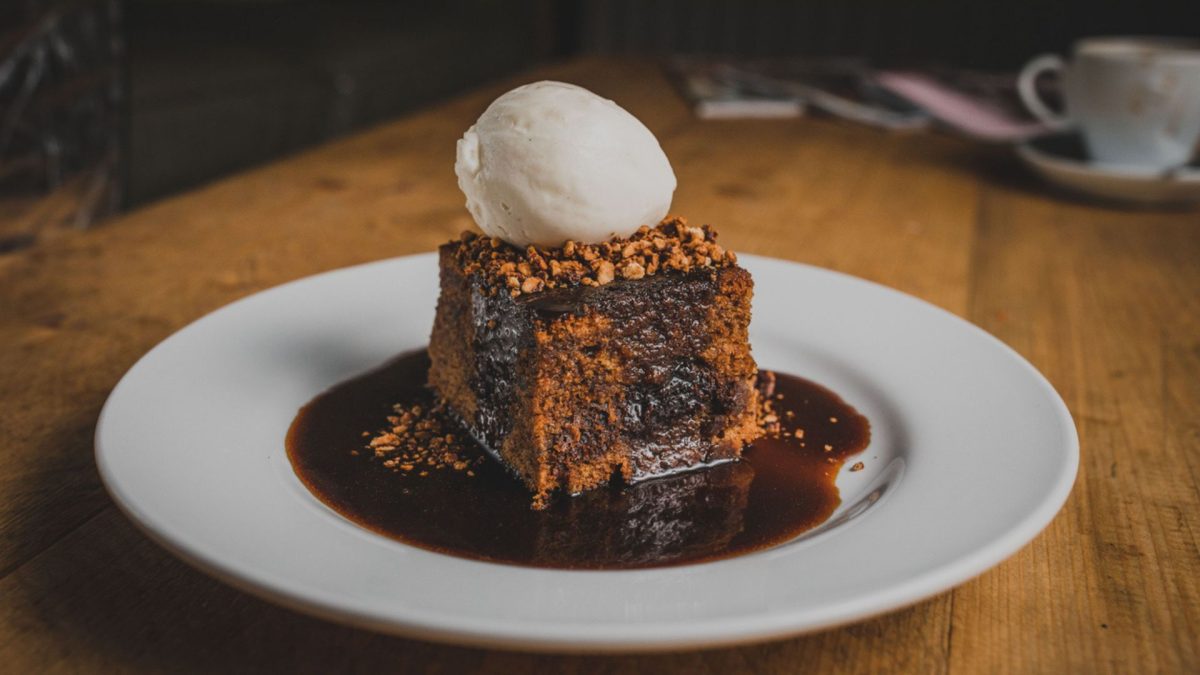
Okay, there is some controversy around where sticky toffee pudding came from – but the Lake District is one of the top contenders!
One of the most widely accepted stories credits Francis Coulson, who ran the Sharrow Bay Hotel on the shores of Ullswater in the 1970s. Inspired by the sweeping lake views and the idea of creating a comforting, rich dessert, Coulson’s version became a hit with guests.
Nearby Cartmel (in South Lakeland) also claims a slice of sticky toffee pudding fame. The village is home to the Cartmel Sticky Toffee Pudding Company, which produces the dessert for visitors and fans across the UK.
Cartmel’s version has helped cement the pudding as a British culinary classic, making the Lake District a must-visit for anyone with a sweet tooth.
8. There’s an underwater village
In the late 1920s, the Haweswater Reservoir was created in the Mardale Valley to provide water for the north-west of England, flooding the village of Mardale Green. Villagers were relocated, their homes dismantled, and even bodies from the church graveyard were moved to St Michael’s Church in Shap.
Construction of the dam, which took almost a decade due to interruptions, was considered a major engineering feat at the time, and workers lived in a temporary village called Burnbanks.
Today, the reservoir holds around 85,000 million litres of water, but during periods of drought, the village re-emerges. In May 2025, low rainfall caused water levels to drop around 30% below normal, revealing rocks, building foundations, and remnants of the old streets!
Visitors can now see parts of the village that have been hidden under water for decades, providing a fascinating glimpse into the past and the human stories submerged beneath this beautiful Lake District reservoir.
9. The area is home to rare wildlife
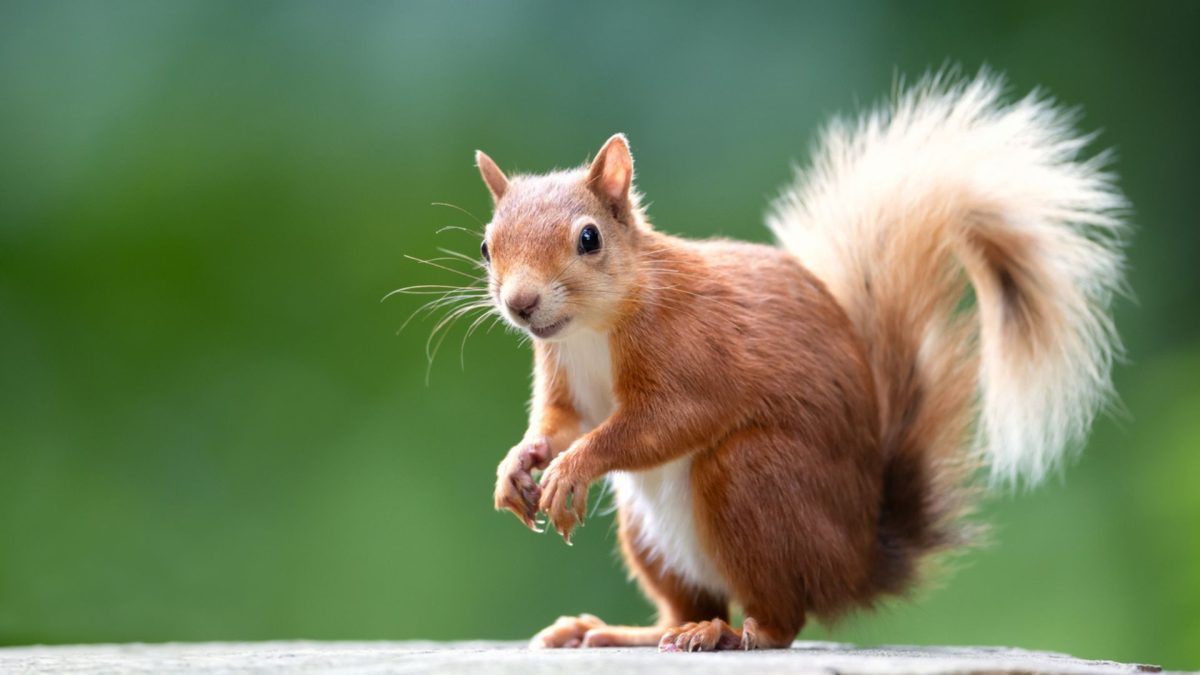
The Lake District is packed with wildlife you won’t find in many other parts of England. Some of the highlights include:
- Red squirrels. These native squirrels survive in the park’s ancient woodlands, one of the few strongholds left in England.
- Ospreys. After being absent for decades, ospreys returned to nest near Bassenthwaite Lake in 2001 and are now carefully monitored each year.
- Peregrine falcons. Keep an eye out on the cliffs; these fierce birds of prey patrol the fells and valleys.
- Alpine cinquefoil. This delicate plant grows on rocky ledges above 700 m, thriving in the harsh, high-altitude conditions.
- Touch-me-not balsam. Found in shady riversides, this rare wildflower adds splashes of color to the Lake District’s woodlands.
Visiting the Lakes is a chance to see these incredible species in their natural habitats, from the valley floors to the windswept peaks.
10. The Lake District has its own Cumbrian dialect
If someone tells you to “follow the beck up the fell past the gill”, don’t panic – they’re not speaking riddles, just Cumbrian. The local dialect is packed with words that date back to Viking times, thanks to Old Norse and Old English influences.
Many of the region’s place names (like Threlkeld, Scafell, and Grasmere) carry those same linguistic roots. Terms like beck (stream), fell (mountain), and gill (ravine) are still used widely today and reflect the area’s Viking heritage.
Next time you’re chatting with a local, listen closely and you might be hearing echoes of a thousand-year-old language still going strong today.
11. It’s one of the wettest places in England
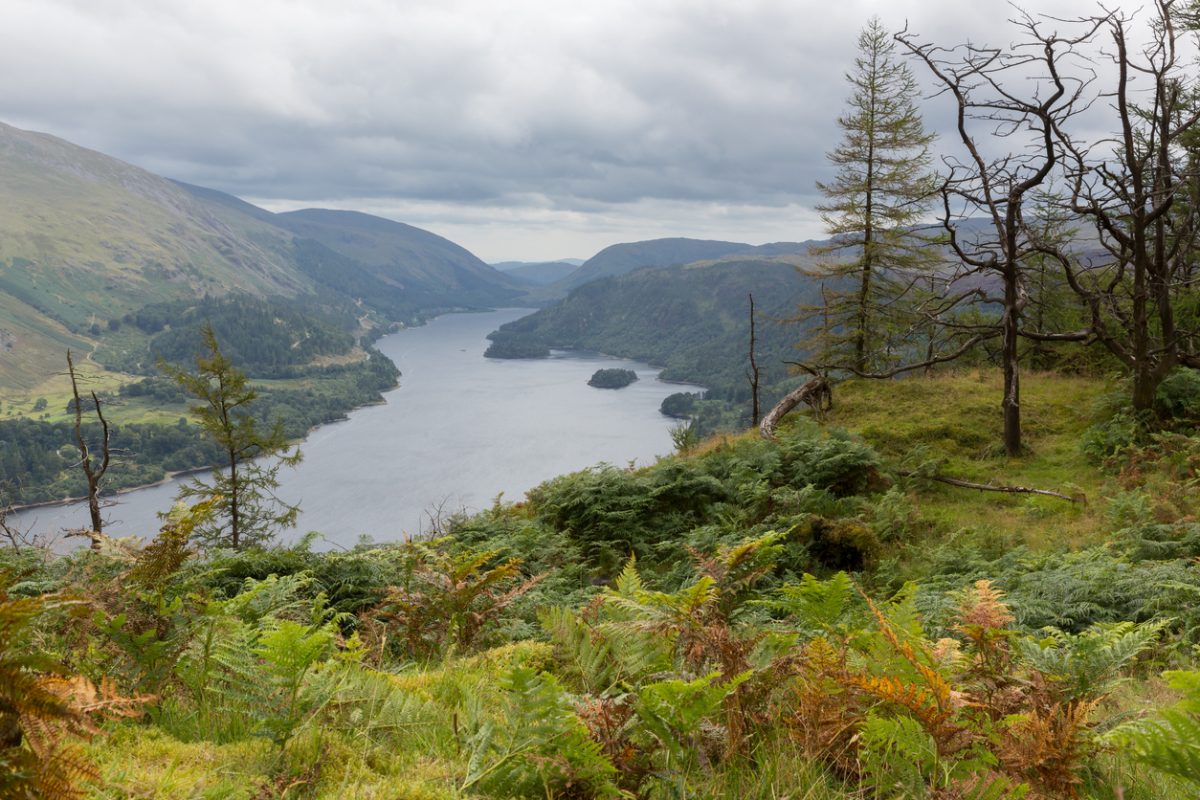
Pack a raincoat because the Lake District earns its name the hard way! Seathwaite, a tiny hamlet in Borrowdale, regularly tops the charts as the wettest inhabited place in England, with over 3,500 mm of rain a year.
In November 2009, it rained so much that Seathwaite recorded more than 316 mm in just 24 hours. That’s enough to fill hundreds of swimming pools.
But the payoff for all that rain? Lush valleys, glittering waterfalls, and the kind of emerald scenery that keeps walkers coming back again and again.
12. It’s a source of literary inspiration
Few places in the world have inspired as much poetry and prose as the Lake District. William Wordsworth, born in nearby Cockermouth, found his muse in these landscapes. His famous poem “I Wandered Lonely as a Cloud” was inspired by daffodils near Ullswater.
He wasn’t alone. Beatrix Potter, Samuel Taylor Coleridge, and John Ruskin all found creative refuge here. Even today, writers and artists visit to trace Wordsworth’s footsteps – literally, along the new Wordsworth Way, which follows the paths and places that shaped his work.
Fun fact: You can visit Wordsworth’s home, Dove Cottage (where he lived with his sister Dorothy) to learn more about his life and works. It’s a real treat for fans of poetry and history alike.
Want to know more Lake District facts? Come and visit!
Whether you’re hiking the fells, cruising across Windermere, or simply soaking in the views from your cottage, the Lake District offers something unforgettable for every visitor. With so much to see and do year-round, it’s easy to understand why millions of visitors return time and time again.
Staying in a cosy cottage gives you the perfect base to explore, whether you prefer early morning walks beside misty lakes or evenings spent relaxing by the fire. Book your stay with The Coppermines and experience the best of the Lakes – breathtaking landscapes, rich history, and unforgettable adventures.


