

The Catbells walk: Route, parking, and everything you need to know

Few Lake District walks deliver as much for the effort as Catbells. It’s short enough for a morning, accessible enough for older children, and the views from the summit are genuinely among the best in the national park.
Here’s everything you need to plan the Catbells walk.
Walking Catbells at a glance
| Detail | Info |
|---|---|
| Location | North Lakes |
| Catbells height | 451m / 1,480ft |
| Total ascent | Approx 380m / 1250ft |
| Distance | 3 – 4.5 miles / 5 – 7km |
| Walk time | 1.5–3 hrs |
| Difficulty | Moderate |
| Start point | Usually Hawes End, near Keswick |
The out-and-back Catbells route from Hawes End
The standard Catbells hike starts at Hawes End, a small landing stage on the western shore of Derwentwater.
From the car park, cross the road and follow the path uphill to the south-east. The initial section is the steepest (rocky and direct) with a false summit that catches first-timers out. Keep going. Once on the ridge, the path levels and the views open up.
From there it’s a clear walk south along the crest to the summit cairn at 451 metres.
The Catbells circular walk from Hawes End
For a longer day, continue south from the summit to Hause Gate (the col between Catbells and Maiden Moor). Then, you can descend west into the Newlands Valley and loop back north to Hawes End on lower paths.
Fun fact: Did you know that Catbells is actually spelled “Cat Bells”? The name is thought to come from Cat Bields, which is an old way of saying “shelter of the wild cat”. Wildcats haven’t roamed the Lake District fells for centuries, but we think it’s a pretty good name regardless!
An overview of Catbells parking
The car park at Hawes End Ferry Terminal holds around 20–25 cars and fills fast, often by 9am on summer weekends, so you’ll need to arrive early to secure a spot.
There’s informal lay-by parking here and in this layby if Hawes End is full. But again, there are only a few spaces, and it fills quickly.
If you want to avoid the hassle of parking at Catbells, here are some ways to get to the trailhead without a car:
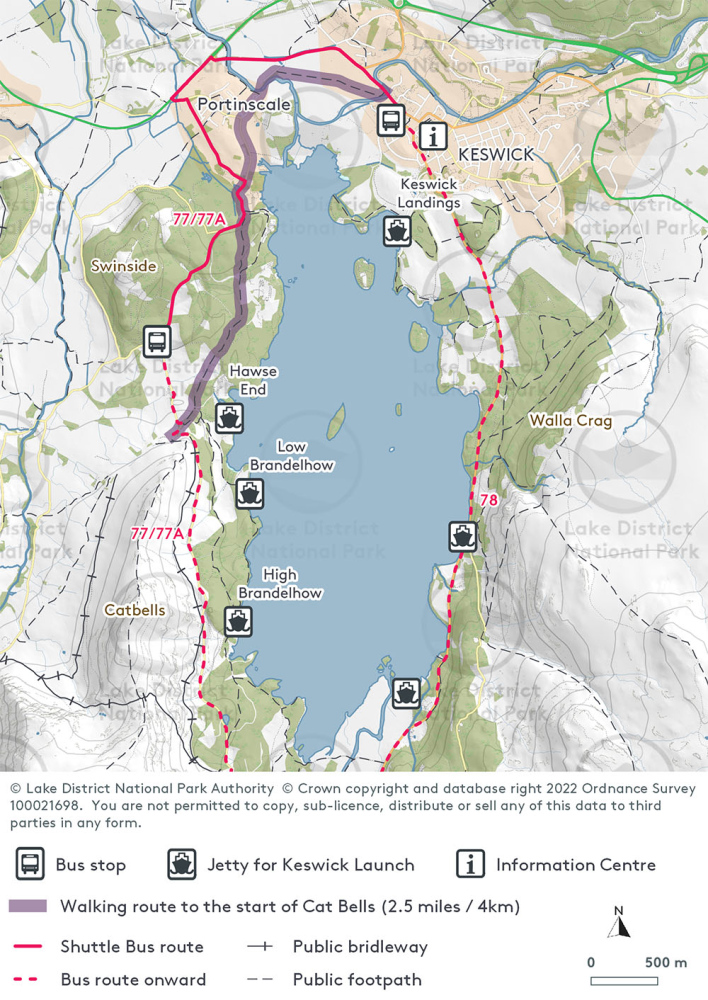
- Hop on the ferry. The Keswick Launch offers a scenic Lake District boat trip across Derwentwater, running throughout spring, summer, autumn, and some days in winter. The boat stops right at Hawse End jetty. Check timetables and fares at the Keswick Launch website.
- Get the bus. Two services make getting here without a car easy. The Borrowdale Bus 78 runs daily throughout the year from Keswick, an open-top bus with great views up the valley. Alternatively, the Honister Rambler (route 77/77A) runs from Keswick to Catbells and on to Honister, Buttermere, and Whinlatter, daily from March to November.
- Walk from Keswick. There’s a pleasant walking route from Keswick to the start of Catbells, mainly on public footpaths through fields and woodland. The walk is around 4km/2.5 miles each way with options for tea stops on the way back at Lingholm, Nichol End, and Portinscale.
Here’s a quick overview of the walking and bus route to Catbells:
What to wear when hiking Catbells
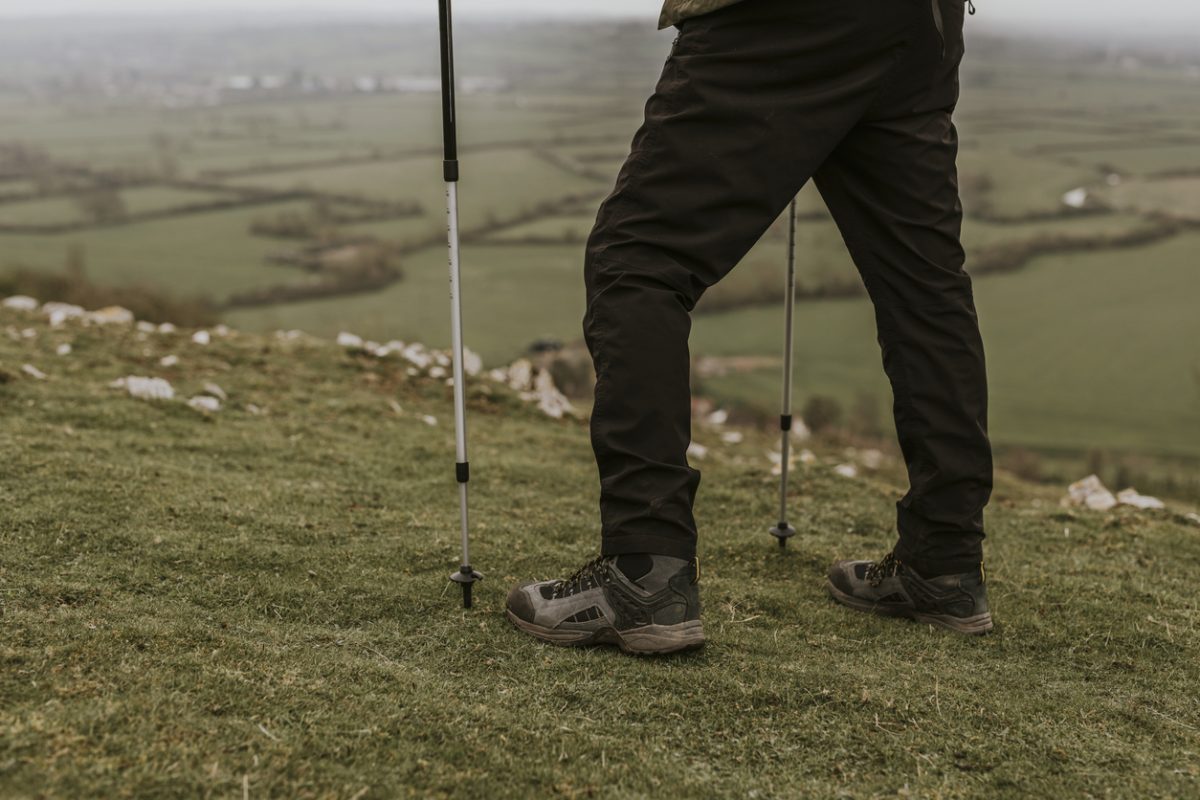
Choose practical, comfortable hiking clothes and walking boots to hike Catbells.
You don’t need to kit yourself out head to toe in technical gear, but a few sensible choices will make the walk a lot more enjoyable and keep you out of trouble if the weather turns.
- Boots. The path from Hawes End is rocky and uneven, with some genuinely steep sections near the start where grip matters. A pair of walking boots with ankle support and a decent sole will serve you well.
- Waterproofs. Pack a waterproof jacket regardless of what the forecast says. A sunny morning in Keswick doesn’t always stay sunny by the time you reach the top!
- Layers. When hiking, the temperature drops the higher you get, and can feel even colder if it’s windy (which it often is at the top of fells). If you stop for any length of time at the top, you’ll be glad you have something extra to put on, even in summer.
- Trousers. Comfortable walking trousers or leggings are fine for this hike, and pack waterproof trousers if you’re heading out in heavy rain or doing the circular route through Newlands (paths can get boggy).
FAQs about the Catbells walk
How long does the Catbells walk take?
Catbells is typically a half-day walk. Most people combine it with lunch in Keswick or a second outing in the afternoon.
- Out-and-back from Hawes End: 1.5–2.5 hours for most adults
- Circular route: 2–3 hours
With young children, it’s worth adding 60–120 minutes to your total time.
Can you walk Catbells from Keswick?
Yes, you can walk from Keswick town centre through Portinscale to the start of the hike, which adds about 4km to your total distance each way (but it’s pretty much entirely flat).
Is there parking at Catbells?
You can park near Catbells, but there’s no official car park for the hike. Parking includes a small car park at Hawes End and lay-bys nearby, but spaces fill quickly.
If you don’t want to drive, you can get the bus or the ferry from Keswick, or walk.
Can you hike Catbells with kids?
Yes, Catbells is one of the best family walks in the Lakes, suitable for most children aged 5 and above with proper footwear and a sense of adventure.
Recommended reading: Discover 6 family-friendly walks near Coniston!
Ready to conquer the Catbells walk? Book your Lake District stay
Catbells is short, accessible, and delivers views that punch well above its modest height. It’s also manageable for most ages and experience levels, making it one of the must-do fells when visiting the Lakes.
And if you’re looking for a base to rest after a fun day hiking the fells, take a look at Coppermines Cottages. Our self-catered cottages give you the flexibility of early starts without the rush of a hotel breakfast and somewhere comfortable to come back to when your legs have had enough.


