

How many lakes are in the Lake District? Full list and facts
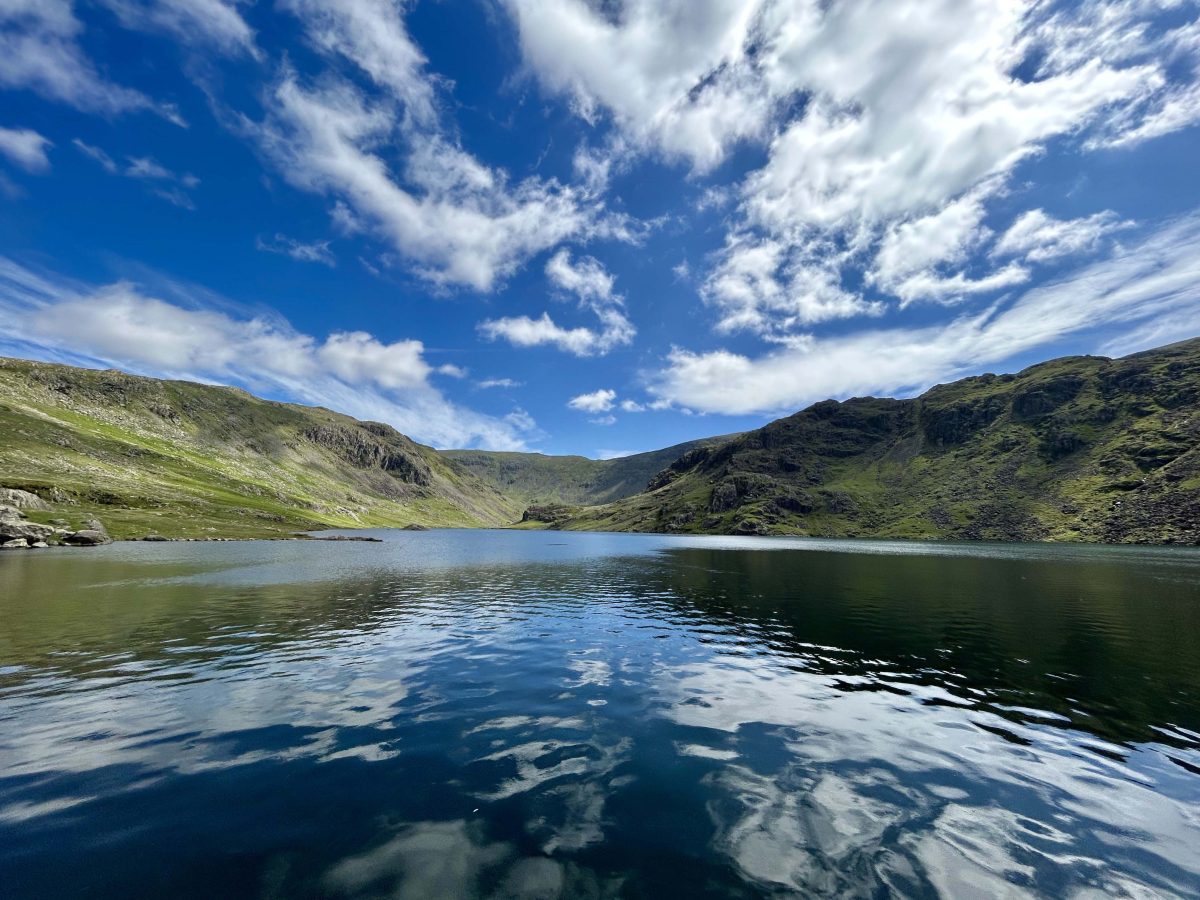
The Lake District sounds like it should be full of lakes, right?
Well, here’s the twist: it isn’t.
We know, it sounds confusing. But don’t worry – in this guide, we clear up the mystery.
Keep reading for a clear breakdown of how many lakes there are and an overview of the major bodies of water. Plus, discover the difference between lakes, waters, meres, and tarns.
By the end, you’ll finally understand exactly how many lakes are in this beautiful corner of the world.
How many lakes are there in the Lake District?
In the entire Lake District, there’s only one actual lake: Bassenthwaite.
Yes, really. It’s one of the most interesting facts about the Lake District.
For a place famous worldwide for its “lakes,” the rest of them quietly go by other names, like “water,” “mere,” or “tarn.”
For example, Windermere, Ullswater, and Derwentwater are among the largest and most famous – but none are officially “lakes”.
Why the number of lakes in the Lake District is confusing
The confusion comes down to history. Long before the area became a national park, Norse settlers and Anglo-Saxons were naming the landscape. “Water” comes from the Old Norse word vatn. . “Mere” comes from Old English.
By the time “Lake District” became the name for the region, the labels were already locked in.
Here’s a quick breakdown of the differences between each type of body of water in the Lake District:
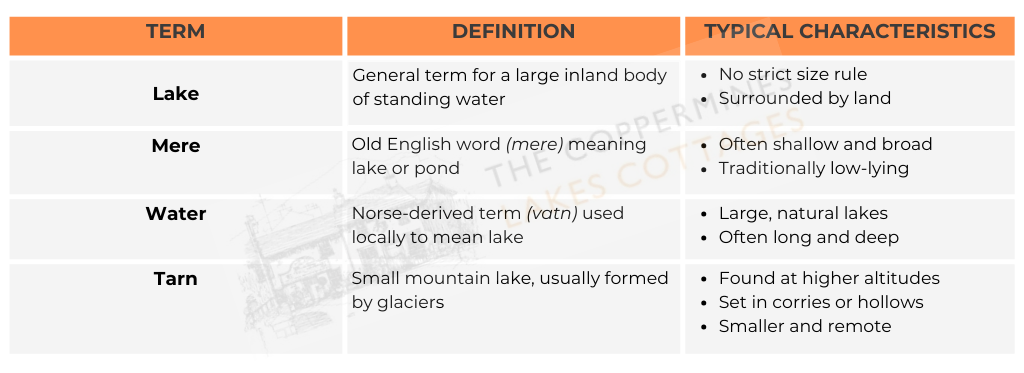
So, depending on how you count, the answer changes:
- Counting only places officially called “lake”? One.
- Counting all the major bodies of water people think of as lakes? 16.
- Counting every tarn and hidden pool in the fells? You’d be there a while.
What are the 16 “lakes” in the Lake District?
Before we dive in, a quick reminder: despite the name, these aren’t all technically “lakes.” They’re a mixture of meres, waters, and tarns.
But in everyday conversation? They’re grouped as the region’s 16 lakes.
So let’s take a look at which bodies of water make the list:
1. Bassenthwaite Lake, Lake District: The only one officially called a “lake.”
2. Windermere, Lake District: England’s largest body of water, stretching over 10.5 miles (18km).
3. Ullswater, Lake District: The second-largest lake at 7.5 miles (12 km) long, known for its ribbon-like shape and classic steamers.
4. Derwentwater, Lake District: Near Keswick, popular for boating and framed by Catbells and Skiddaw fells.
5. Coniston Water, Lake District: The third-largest lake, famous for Donald Campbell’s 1967 Bluebird speed record attempt.
6. Ennerdale Water, Lake District: One of the most remote and unspoiled, with no lakeside road along much of its shore.
7. Wast Water, Lake District: England’s deepest lake at approximately 79 metres (258 feet), overlooked by Scafell Pike.
8. Crummock Water, Lake District: Long and narrow, west of Keswick, with dramatic views of Mellbreak Fell.
9. Buttermere, Lake District: One of the smaller major lakes at around 1.25 miles (2 km) long, with a popular circular walking route.
10. Loweswater, Lake District: One of the quietest lakes, notable for its unusual north–south orientation (most lakes in the Lake District run roughly east–west, following the valleys).
11. Grasmere, Lake District: A small, tranquil lake surrounded by rolling hills, known for its scenic walking trails that inspired Romantic poet, William Wordsworth.
12. Rydal Water, Lake District: A small body of water between Grasmere and Ambleside, often combined with a walk to Rydal Cave.
13. Thirlmere, Lake District: A reservoir (man-made lake used to store water for human use) created in the 19th century to supply water to Manchester.
14: Haweswater Reservoir, Lake District: Also supplies water to Manchester; the original village was flooded when the reservoir was built!
15: Esthwaite Water, Lake District: A designated Site of Special Scientific Interest, known for coarse fishing and wildlife.
16: Elterwater, Lake District: Small and shallow near Elterwater village, often more reedbed than open water in places.
Fun fact: Depending on who you ask, there may be a seventeenth body of water in this list! Brothers Water, Lake District, causes a little debate, with some calling it the largest tarn and others saying it’s the smallest lake.
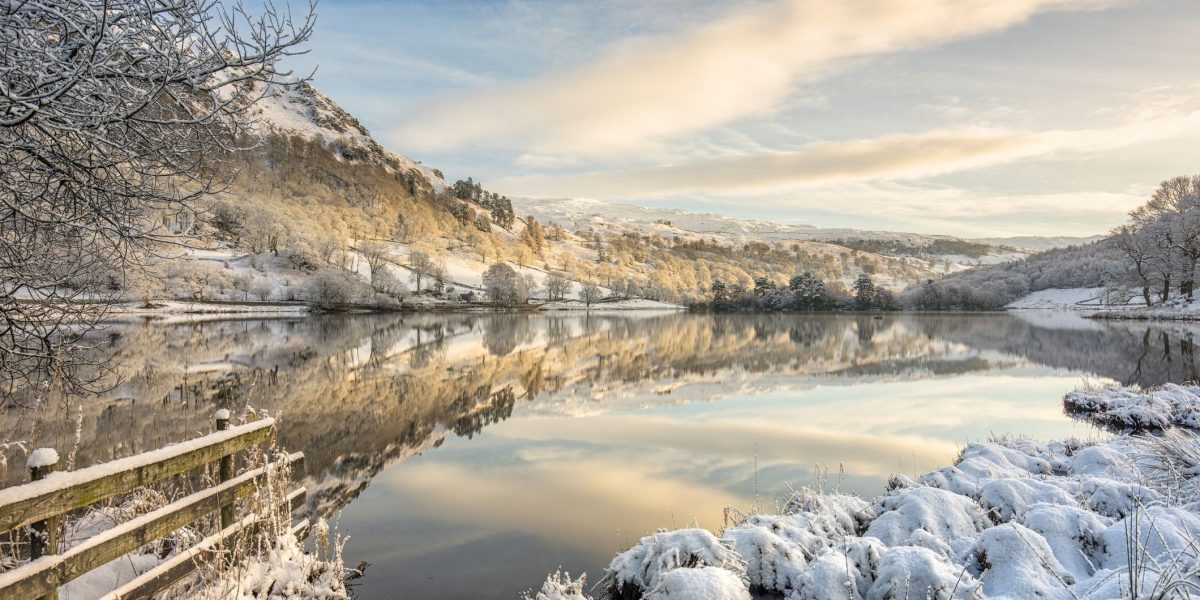
What about Lake District tarns?
When it comes to tarns in the Lake District, there really isn’t one official master list. Why? Because there are hundreds of them, and estimates vary wildly. Some lists say there are 197 tarns, while other sources say 463.
Here are some well-known ones you might stumble across while hiking:
- Red Tarn, Lake District: Tucked below Helvellyn, it’s a high-altitude pool with striking reflections of Striding Edge and popular with climbers and landscape photographers.
- Stickle Tarn, Lake District: Sitting at the base of Pavey Ark in the Langdale Valley, it’s a magnet for hikers tackling the Langdale Pikes and offers dramatic cliff-backed scenery.
- Angle Tarn, Lake District: Perched at 560m in the Far Eastern Fells, this tarn sits in a remote corrie and is famous for its perfectly still waters mirroring surrounding crags.
- Blea Tarn, Lake District: Nestled west of the Langdale Pikes and surrounded by woodland and rocky slopes, this serene spot is often used as a base for local fell walks.
- Easedale Tarn, Lake District: A moderate hike from Grasmere, this accessible tarn sits in a U-shaped valley and is framed by waterfalls and mossy boulders.
- Loughrigg Tarn, Lake District: A small, scenic pool at the foot of Loughrigg Fell, offering reflections of the surrounding hills and easy access from Ambleside and Windermere.
- Yew Tree Tarn, Lake District: A quiet, high-level pool above Coniston Water, often used as a resting spot for walkers and noted for its panoramic views of the Coniston Fells.
Curious to find out the best areas for wild swimming? Read our blog to see which Coppermines Cottages offer the best access to local Lake District swim spots!
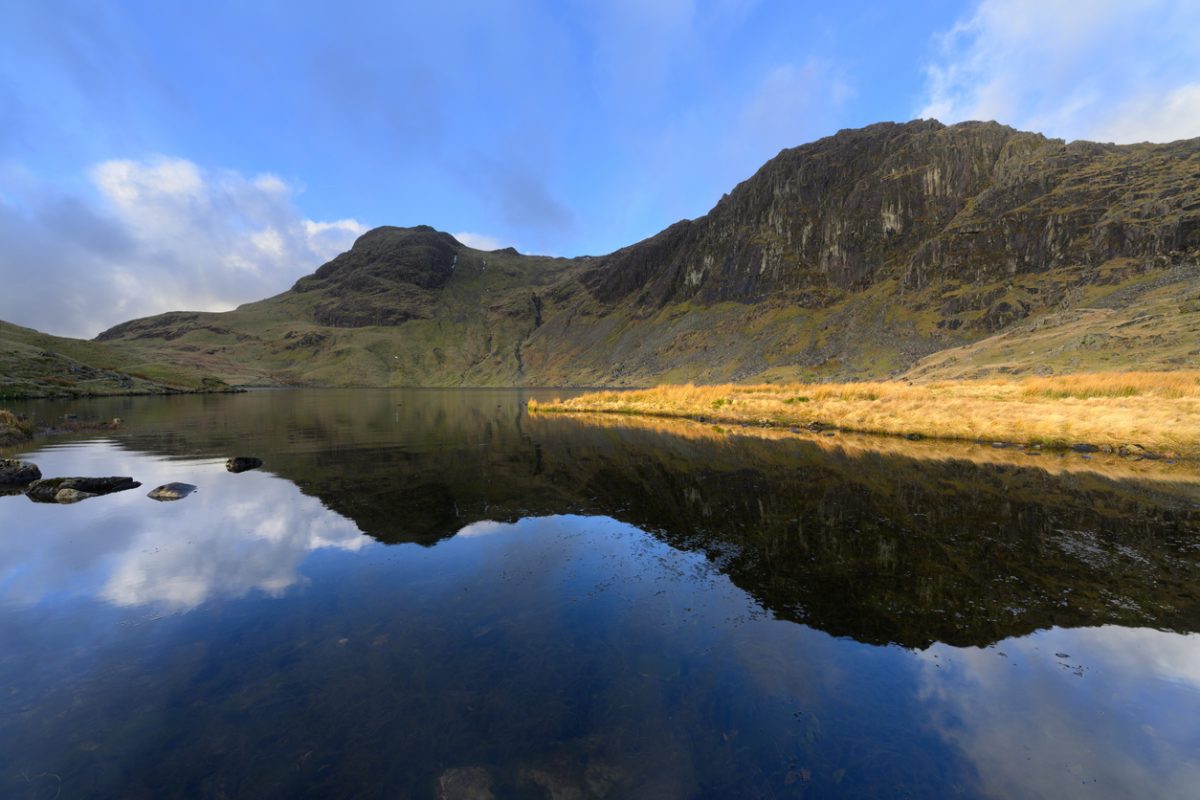
FAQs about lakes in the Lake District
What is the largest body of water in the Lake District?
The largest body of water is Windermere, stretching over 10.5 miles (18km) long. It’s one of the most popular for boating, sightseeing cruises, and lakeside walks.
Are the lakes in the Lake District natural or man-made?
Most of the lakes in the Lake District are natural, formed by glacial activity during the last Ice Age.
However, a few (like Thirlmere and Haweswater Reservoirs) were converted or expanded into reservoirs in the 19th and 20th centuries to supply water to towns and cities such as Manchester.
What is the deepest lake in the Lake District?
The deepest lake is Wast Water, plunging to approximately 79 metres (258 feet). It sits beneath the dramatic backdrop of Scafell Pike, England’s highest mountain, making it both a deep and spectacularly scenic lake.
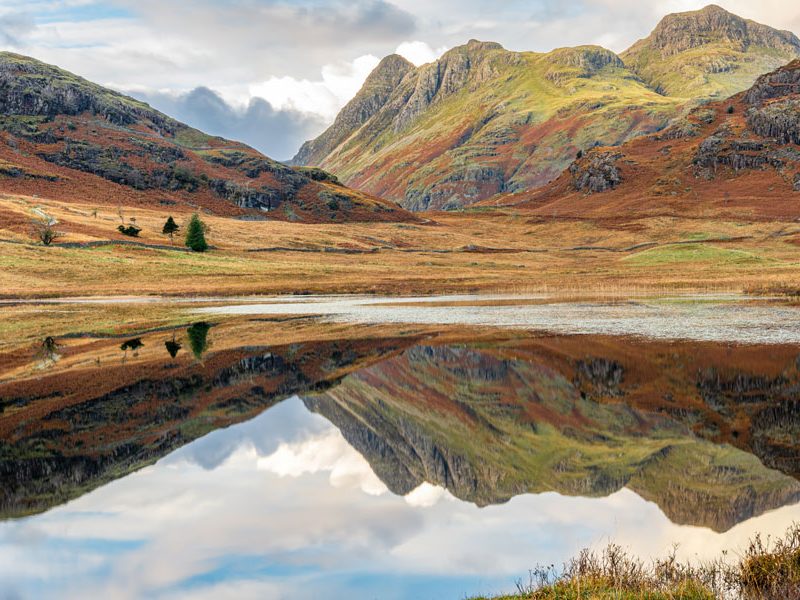
Explore waters in the Lake District from a Coppermines Cottage
Staying at a Coppermines Cottage puts you right in the heart of the Lake District, with easy access to both the well-known lakes and hidden high-altitude tarns. Morning hikes, peaceful waterfall walks, and sunsets over the fells are all just steps away.
Browse our waterfall and wild swimming cottages or lake view cottages to experience the magic of the Lake District’s waterways from a cosy retreat.


